top of page
_edited.png)

Northern - Hanoi
Located in northern Vietnam, Hanoi is the well-known capital of the country and serves as its political and cultural center. Government buildings and foreign embassies line the streets, giving the city an air of solemnity and a sense of deep-rooted history.
At the same time, Hanoi is far from being just a “serious capital.”
Around Hoan Kiem Lake, a popular gathering place for locals, you’ll find early morning Tai Chi sessions, karaoke contests at sunset, and young people dancing with portable speakers—creating a nostalgic atmosphere reminiscent of Japan in the Showa era.
For history enthusiasts, Hanoi offers plenty to explore, from the Mausoleum of President Ho Chi Minh, the founding father of modern Vietnam, to the Imperial Citadel of Thang Long (a UNESCO World Heritage Site), and colonial-era buildings influenced by the French. These landmarks reflect a unique fusion of Eastern and Western cultures.
Hanoi is a city where formality and simplicity, tradition and modernity coexist in a curious balance—a place that truly symbolizes the depth and complexity of Vietnam.
HANOI
Home > Destinations > Northern - Hanoi


Tourist destination information
1. Ho Chi Minh Mausoleum
In this mausoleum in Ba Dinh district of Hanoi city , the body of Ho Chi Minh, who is still loved by the people even in this day and age as the founding father of Vietnam, is enshrined in a state of permanent preservation.
The mausoleum, heavily guarded by soldiers in white uniforms, is open to the public at certain times each week, attracting not only foreign tourists but also local Vietnamese who come to see the remains of their national heroes. People are waiting in long lines to attend.
2. Thang Long Ruins
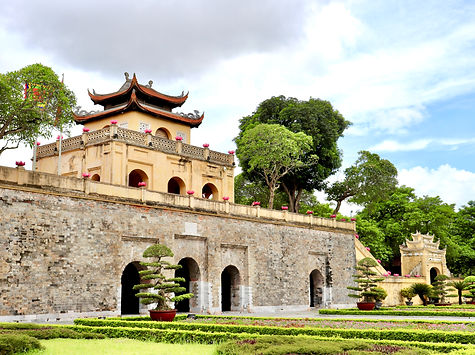
Thang Long is the former name of Hanoi, and the Vietnamese dynasties had their capital here almost consistently from 1010 to 1804, so the ruins excavated in 2002 are like pages of a book with ruins from each period. It is characterized by the fact that they overlap as if turning over.
In addition, in August 2010, it was registered as Vietnam's sixth UNESCO World Heritage Site (cultural heritage), and part of the Western-style building has been turned into a museum, where excavated earthenware and materials are displayed.
3. Hanoi Cathedral
Built in 1886 in the "Neo-Gothic architectural style" during the French colonial period, this cathedral near Hoan Kiem Lake is a popular tourist spot in Hanoi with over 100 years of history.
Approximately 20% of Vietnam's population is said to be Catholic, and although there are many other churches in Hanoi, this large church is the symbol and center of the faith. It is also open to the public during mass hours and is visited by many tourists.

4. Hoan Kiem Lake
Hoan Kiem Lake, a symbol of Hanoi, is known as Hoan Lake, which is said to have been named after the first emperor, who obtained the lake's treasured sword during the Dynasty and won a battle against the Ming Dynasty, who surrendered the sword on a small island in the lake. It came to be called ``Khiem (sword)''.
In addition, at the Jade Mountain Shrine in the northern part of the lake, a stuffed 2m-long giant turtle that was caught in the lake is on display, and it is said to be related to the legend that has been passed down here.

Hanoi local area and other northern cities
bottom of page