top of page
_edited.png)

Hanoi - North Vietnam
Located in northern Vietnam, Ha Noi is the country's capital and the center of politics, culture, and history. Government offices and foreign embassies are scattered throughout the city, giving it a distinctive atmosphere of dignity and historical significance.
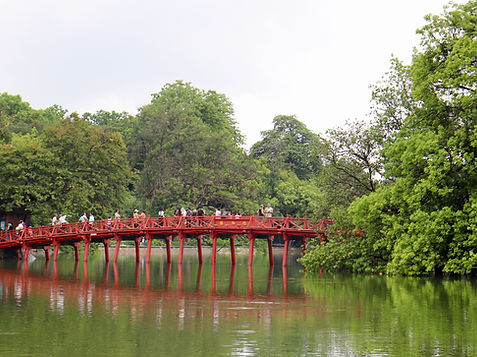
At the same time, Ha Noi is far more than just a formal political capital. Around Hoan Kiem Lake, the city's most popular gathering place, you can find locals practicing tai chi at sunrise, singing karaoke at sunset, and young people dancing to music from portable speakers. These scenes create a nostalgic atmosphere that feels both lively and timeless.
For history enthusiasts, Ha Noi offers a wealth of cultural landmarks, including the Ho Chi Minh Mausoleum, dedicated to the founding father of modern Vietnam, the Imperial Citadel of Thang Long, a UNESCO World Heritage Site, and numerous buildings influenced by French colonial architecture. Together, they showcase the unique blend of Eastern and Western cultures that defines the city.
Ha Noi is a place where discipline and simplicity, tradition and modernity coexist in remarkable harmony. It is a city that embodies the depth, character, and enduring spirit of Vietnam.
Hanoi
Home> Vietnam Insights> Hanoi - North Vietnam


Places to Visit in Northern Vietnam
1. Ho Chi Minh Mausoleum
Located in Ba Dinh District, Ha Noi, this mausoleum houses the preserved body of Ho Chi Minh, the founding father of modern Vietnam, who continues to be deeply respected and admired by the Vietnamese people today.
Guarded by soldiers in white ceremonial uniforms, the mausoleum is open to the public during designated hours each week. Visitors include not only foreign tourists but also large numbers of Vietnamese citizens who patiently queue for the opportunity to pay their respects to one of the nation's greatest heroes.


2. Imperial Citadel of Thang Long
Thang Long, meaning "Ascending Dragon," was the former name of Ha Noi. From 1010 to 1804, it served as the capital of successive Vietnamese dynasties, making it one of the most historically significant sites in the country.
Excavations carried out in 2002 revealed layers of remains from different historical periods stacked upon one another, much like the pages of a history book. This unique archaeological structure offers a rare glimpse into nearly a thousand years of Vietnam's political and cultural development.
In August 2010, the site was inscribed as Vietnam's sixth UNESCO World Heritage Site. Today, parts of the complex, including several Western-style buildings, have been converted into museums where visitors can view excavated artifacts, pottery, and historical documents that tell the story of Vietnam's imperial past.

3. St. Joseph's Cathedral
Built in 1886 during the French colonial era in the Neo-Gothic architectural style, St. Joseph's Cathedral is one of Ha Noi's most popular tourist attractions. Located just a short walk from Hoan Kiem Lake, the cathedral has stood as a landmark of the city for well over a century.
It is estimated that approximately 20 percent of Vietnam's population identifies as Catholic. While there are many churches throughout Ha Noi, St. Joseph's Cathedral remains one of the most important symbols and centers of the Catholic faith in northern Vietnam.
The cathedral is also open to the public during Mass services, attracting not only worshippers but also large numbers of visitors who come to admire its architecture and historical significance.

4. Hoan Kiem Lake
Hoan Kiem Lake, one of the most iconic symbols of Ha Noi, is closely associated with a famous Vietnamese legend. According to the story, Emperor Le Loi, who led Vietnam to victory against the Ming Dynasty with the help of a magical sword, returned the sword to a divine golden turtle on a small island in the lake after the war. This event gave the lake its name, Hoan Kiem, which means "Lake of the Returned Sword."
At Ngoc Son Temple, located on the northern side of the lake, visitors can see a preserved giant turtle measuring approximately two meters in length. Local tradition holds that the turtle is connected to the legendary guardian turtle from the ancient tale, and it remains an important cultural symbol associated with Hoan Kiem Lake and the history of Ha Noi.
Local Areas of Hanoi & Other Northern Cities


bottom of page